Snakes Denounce ‘Unfair and Harmful’ Comparisons to Higher-Ed Staff
Serpentine Council Says Human Academic Behavior “Not Consistent With Snake Culture” Underworld News Network — Creature Profile
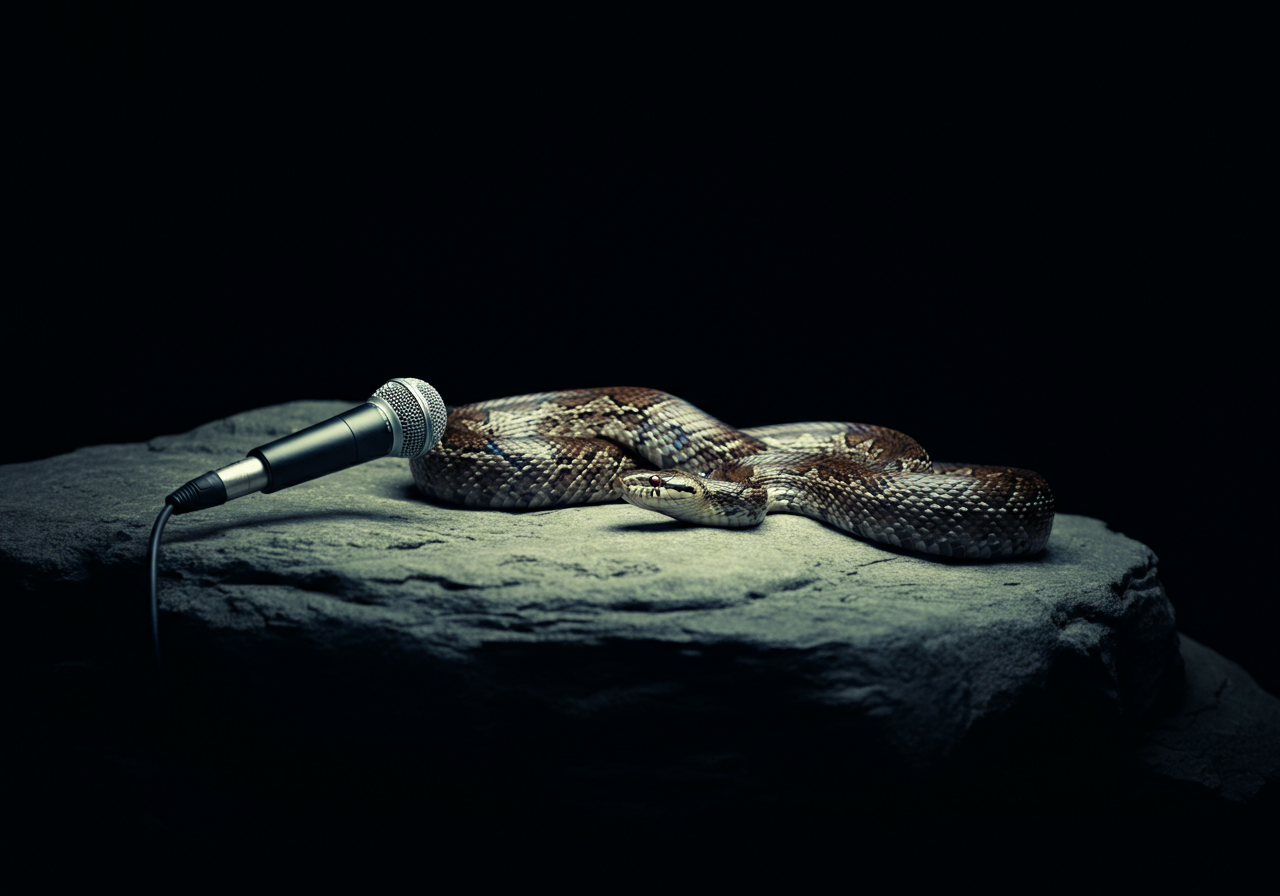
Representatives from several serpent communities issued a formal statement this week objecting to what they describe as “persistent and inaccurate comparisons” between snakes and certain patterns of behavior observed within human higher-education institutions.
The statement was delivered by a senior delegate of the Serpentine Council, who spoke from a rocky outcropping frequently used for interspecies briefings.
“Our community has standards,” the delegate said calmly. “While we acknowledge that humans often use animals metaphorically, we find the comparison in this case confusing and frankly unflattering.”
The complaint centers on the common human habit of describing academic colleagues as “snakes” when referencing political maneuvering, indirect hostility, or strategic communication practices in university environments.
According to the council, these behaviors bear little resemblance to the actual social customs of serpent communities.
“Snakes do not convene six separate gatherings to discuss whether a strike might occur at some unspecified future time,” the delegate explained. “If a strike is necessary, it happens.”
Serpents also rejected the suggestion that their species participates in what humans often describe as “back-channel politics.”
“Snakes do not circulate vague warnings through informal networks while maintaining polite smiles during daylight hours,” the statement continued. “If we have a problem with another creature, we address it directly and then move on.”
Members of the council also expressed particular confusion about what humans call “committee culture,” a structure widely observed in academic institutions.
UNN correspondents attempted to explain that committees often form additional committees to study the recommendations of earlier committees before implementing procedural changes.
The serpentine delegation reportedly fell silent for several seconds after hearing this description.
“Forgive me,” the senior delegate finally responded, “but you are saying that a group of humans gathers to decide whether a different group of humans should gather to think about something.”
“Yes,” the correspondent confirmed.
“And this process can continue for years?”
“That is correct.”
The delegate shook their head slowly.
“In serpent culture,” they said, “we either shed the skin or we do not. There is no subcommittee responsible for evaluating the possibility of shedding.”
The council also addressed the human expression “snake in the grass,” which is frequently used to describe colleagues perceived as quietly undermining others within institutional settings.
“Snakes do hide in grass,” the statement acknowledged. “However, this is typically for hunting or avoiding predators. We do not hide in grass to sabotage someone’s promotion file.”
Several serpents from Snake Island who reviewed preliminary drafts of the UNN report reportedly struggled to understand the metaphor altogether.
“Why would one creature quietly work against another creature inside the same den?” one island resident asked. “Would it not be simpler to leave the den?”
Human observers contacted by UNN offered a number of explanations, including competition for limited funding, internal institutional politics, and the complex incentive structures of modern academic life.
The Serpentine Council responded with visible puzzlement.
“These sound like structural problems within the human system,” the delegate said. “We are unclear why snakes are being blamed.”
The council concluded its statement by urging humans to reconsider the metaphor moving forward.
“We strike when threatened,” the delegate said. “We rest in the sun. We shed what no longer fits. Our behavior is efficient and largely free of procedural drama.”
The representative paused briefly before adding:
“If humans wish to compare themselves to animals when describing academic politics, we recommend species that are more comfortable with extended meetings.”